
Little Red Riding Hood Craft: Make Paper Puppets and Explore the Fairy Tale
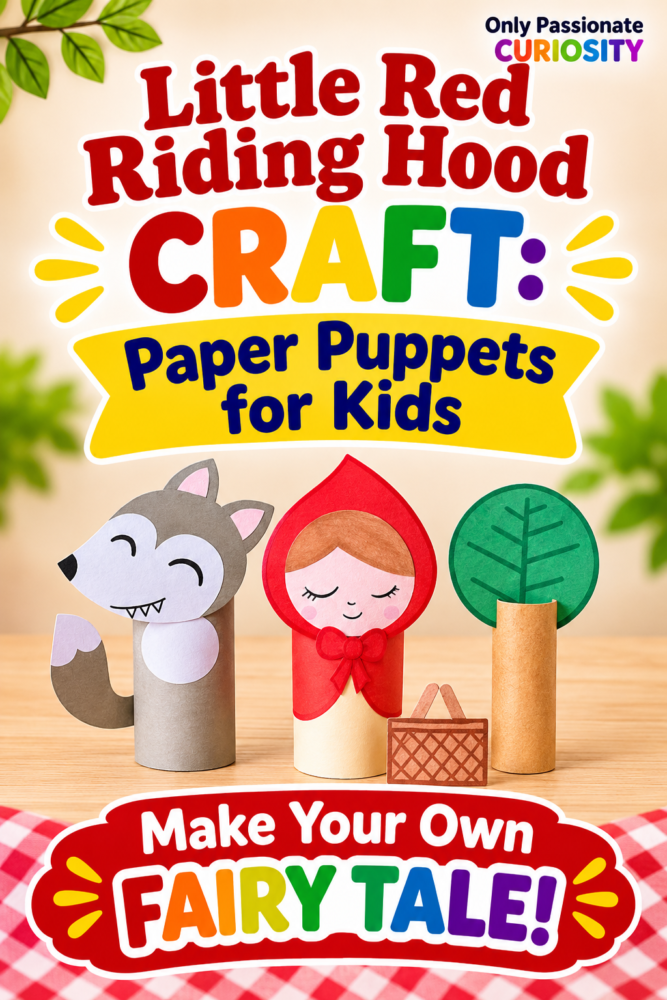
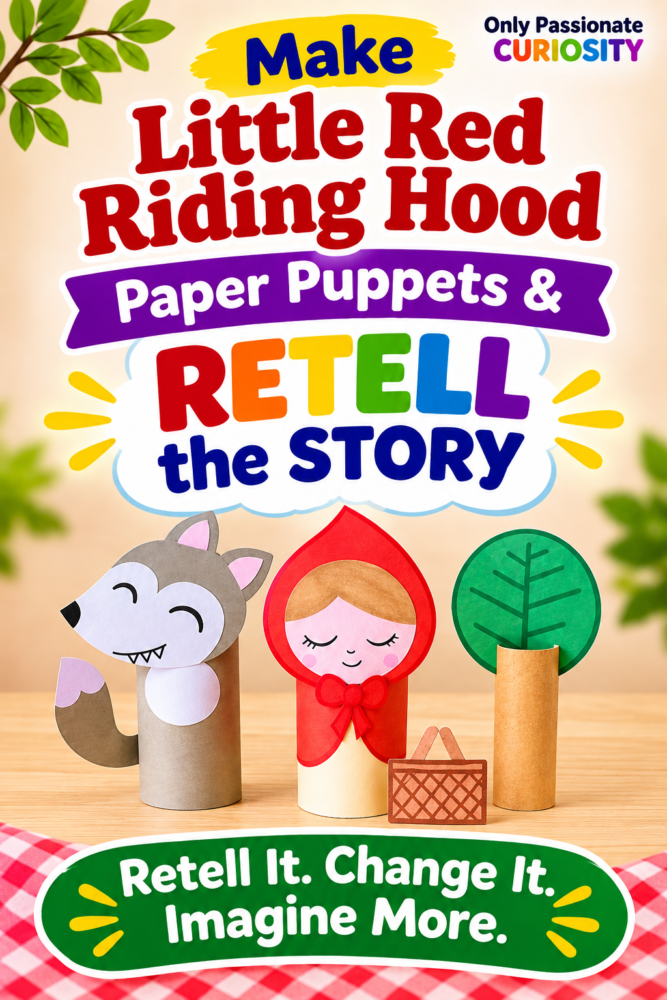
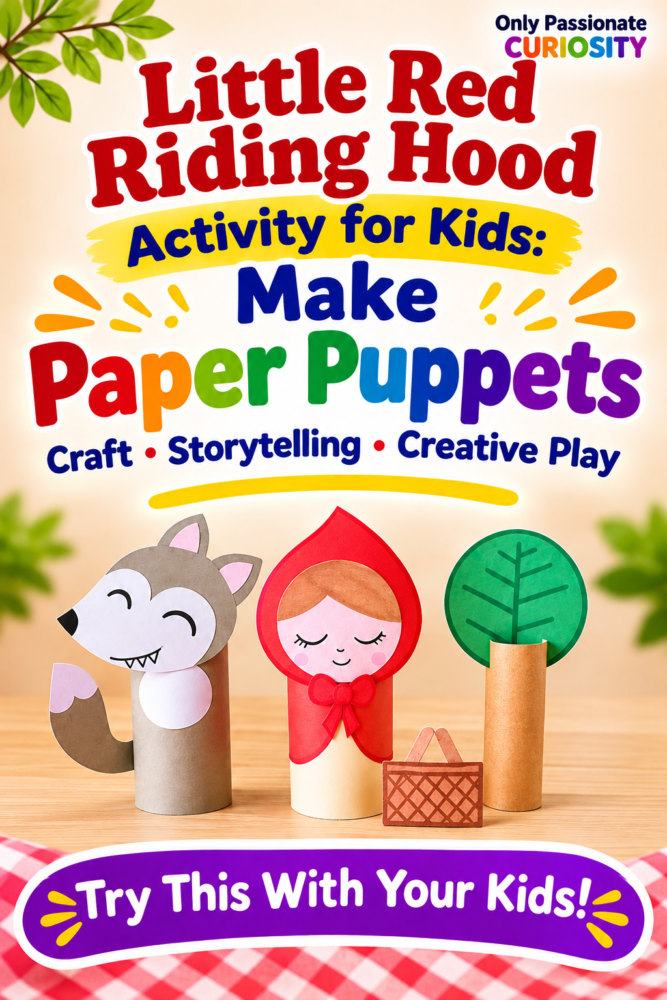
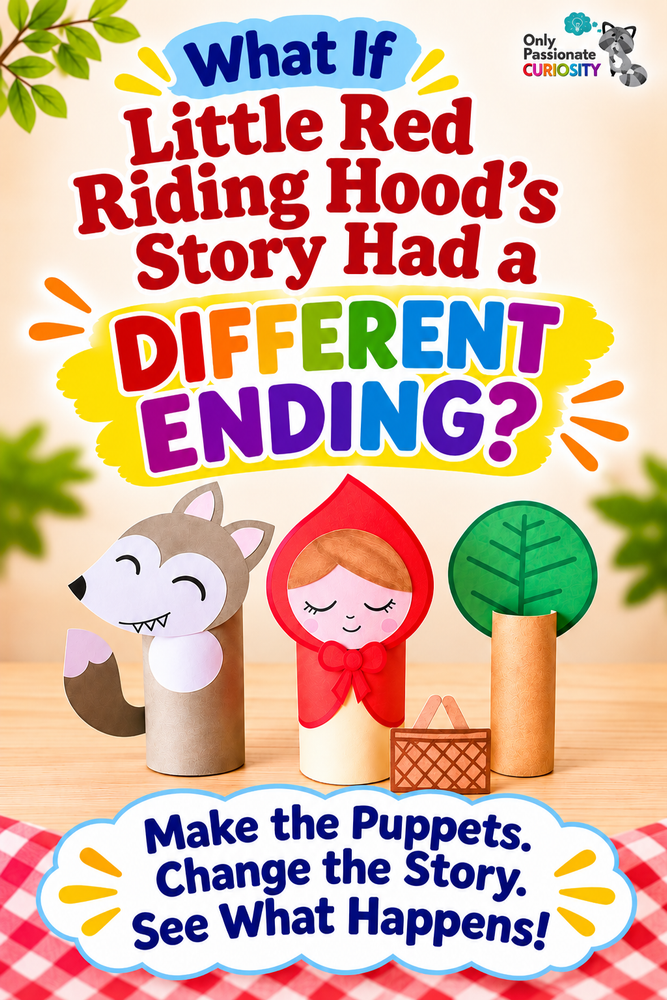
What happens when a familiar fairy tale leaves the pages of a book and steps right into your hands? This Little Red Riding Hood craft turns the classic story into a hands-on paper puppet activity for kids. Children can make their own Little Red Riding Hood paper puppet, create the wolf and forest, and then use their characters for storytelling and imaginative play.
Perhaps Little Red Riding Hood has something to say. Perhaps the wolf has a different version of the story. And what if the forest could tell us what it saw?
Stories become even more interesting when children can play with them, rearrange them, and imagine what might happen next.
This Little Red Riding Hood craft gives children a chance to bring the classic fairy tale to life with simple paper puppets. They can create Little Red Riding Hood, the wolf, and trees to build a little forest of their own.
But don’t stop when the glue dries! Once the puppets are ready, the real adventure begins. Children can retell the story, explore its characters, ask questions about the choices they make, and even invent a different ending.
Let’s gather our supplies and see where the story takes us!
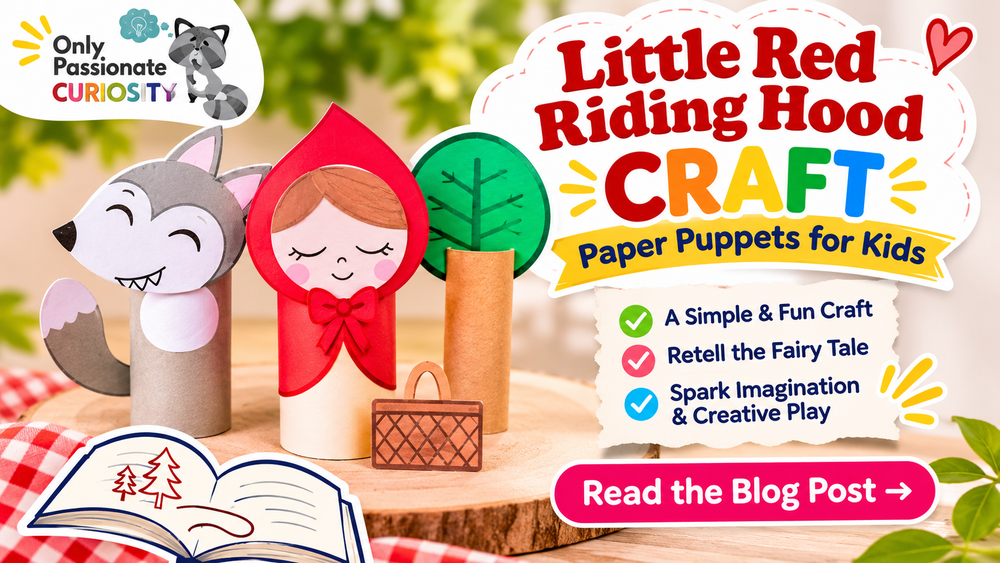
Paper Puppet Little Red Riding Hood Craft for Kids
In this activity, children will make paper puppets of Little Red Riding Hood and the wolf, along with trees to create the forest setting.
The finished puppets can be used for storytelling, imaginative play, or a little puppet show.
List of Supplies for Paper Puppet Little Red Riding Hood Craft:
- Colored cardstock paper
- Pencil
- Craft glue
- Scissors
- Sharpies
- Templates
How to Make Little Red Riding Hood
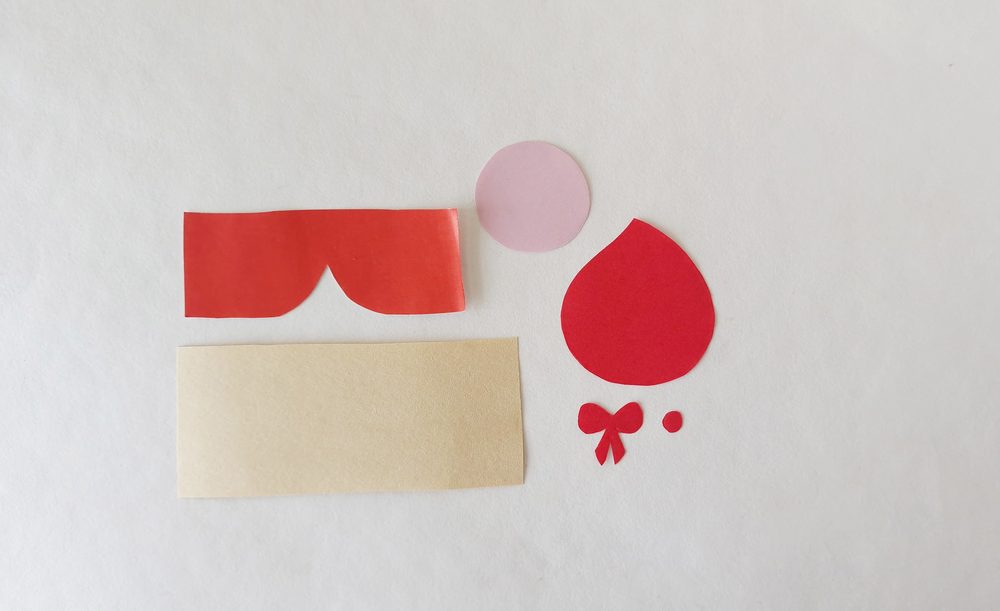
Step 1 – Prepare the patterns
Choose colored cardstock for Little Red Riding Hood, the wolf, and the trees. Trace the patterns onto the cardstock and carefully cut out each piece.
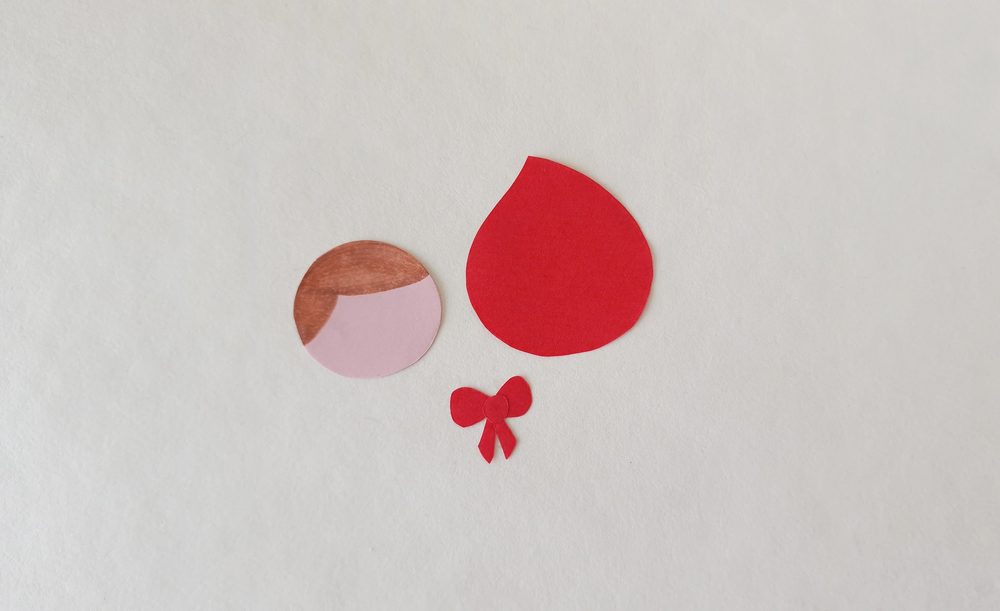
Step 2 – Prepare Little Red Riding Hood’s face and bow
Glue the small circle cutout into the middle of the bow. Use a brown Sharpie to draw her hair on the head cutout.
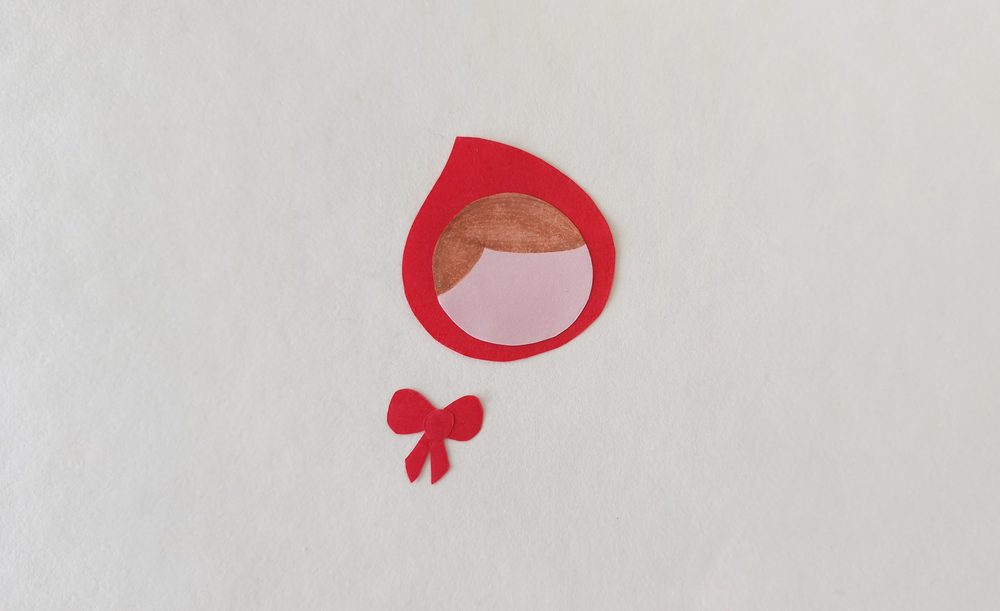
Step 3 – Make her hood
Glue the head cutout to the center of the red hood cutout.
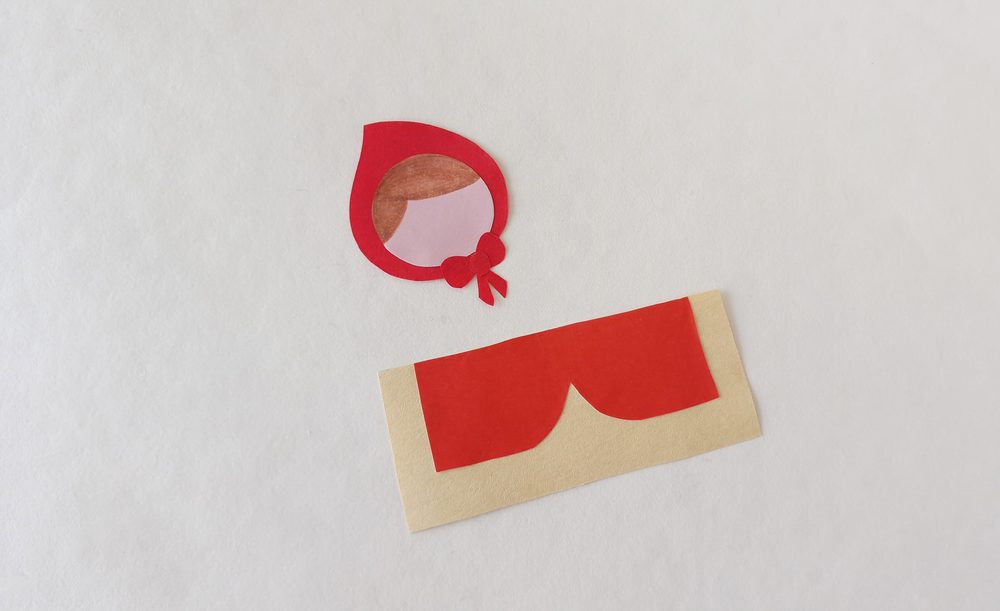
Step 4 – Assemble her cape
Glue the cape cutout to the base cutout. Then glue the bow pattern to the bottom side of the head pattern.
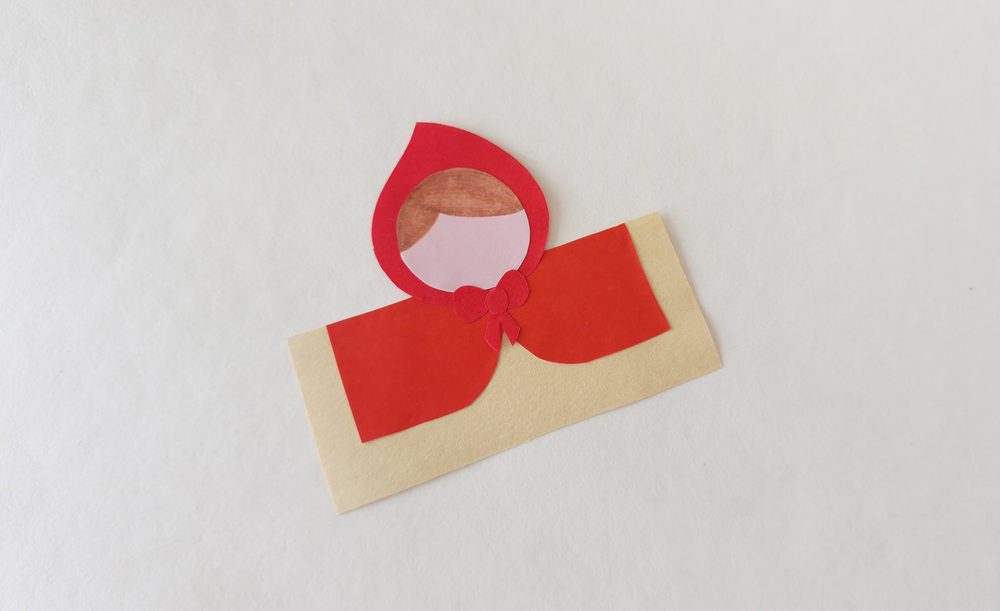
Step 5 – Attach her head
Glue the head pattern to the top side of the base pattern, placing it in the middle.
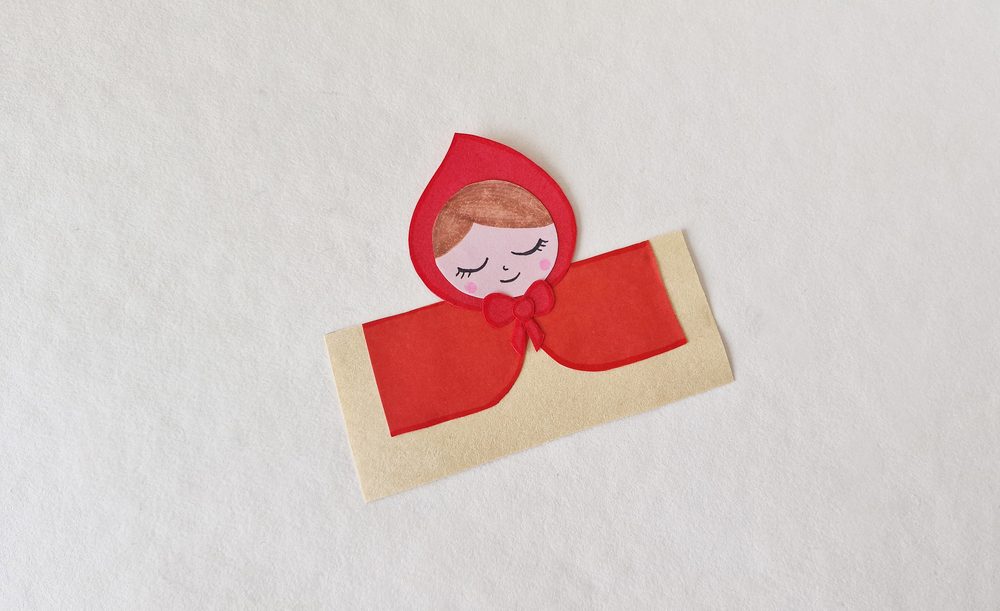
Step 6 – Draw her face
Use a black Sharpie to draw her facial features.
What kind of expression should she have? A cheerful smile? A curious look? Perhaps she looks a little surprised. Children can give their puppet a personality of its own.
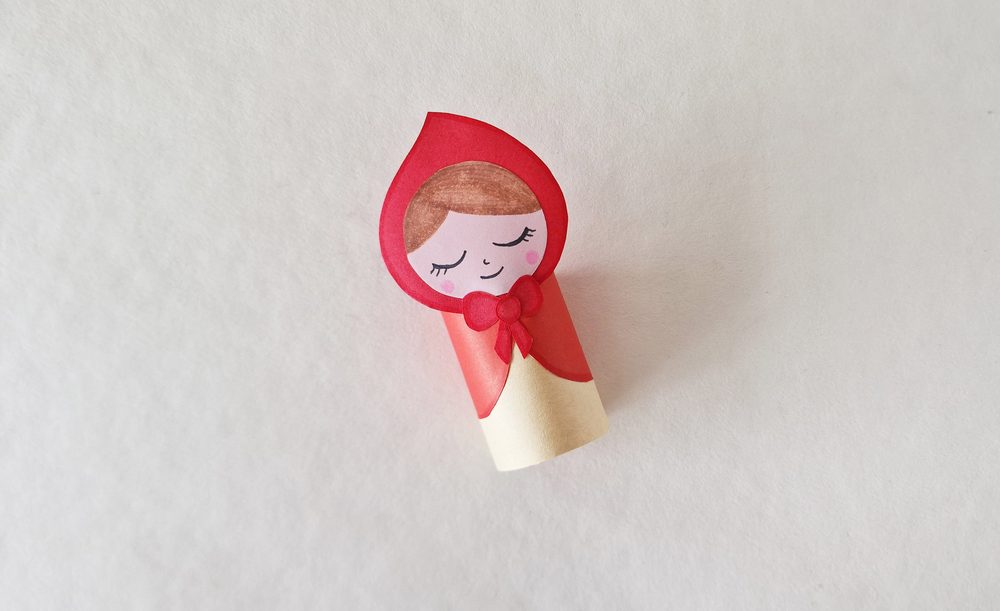
Step 7 – Make the puppet body
Roll the paper pattern and glue the two open sides together to secure its tube shape.
Little Red Riding Hood is ready!
How to Make the Wolf
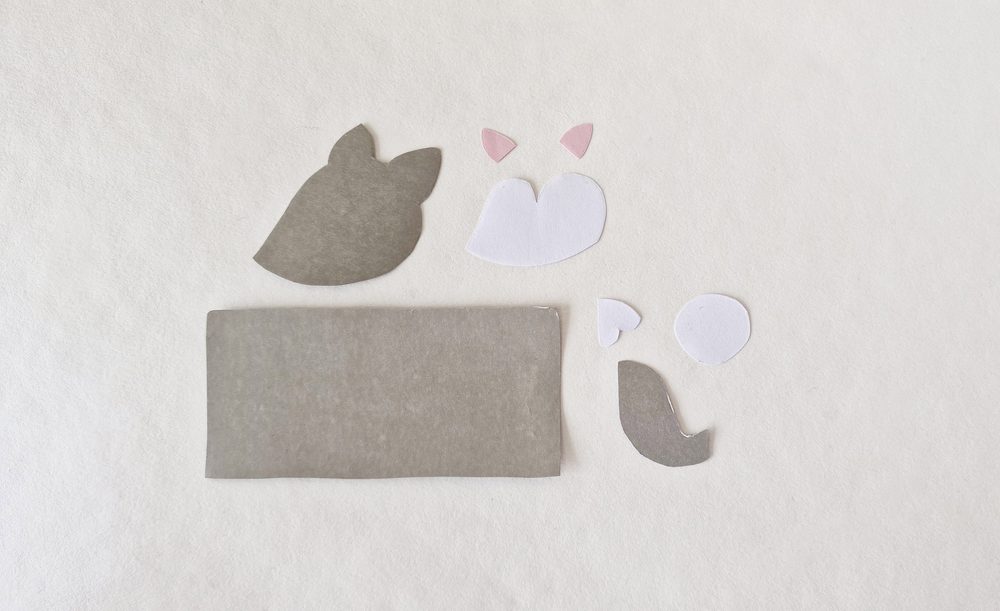
Step 8 – Prepare the wolf patterns
Take the cardstock pieces prepared for the wolf.
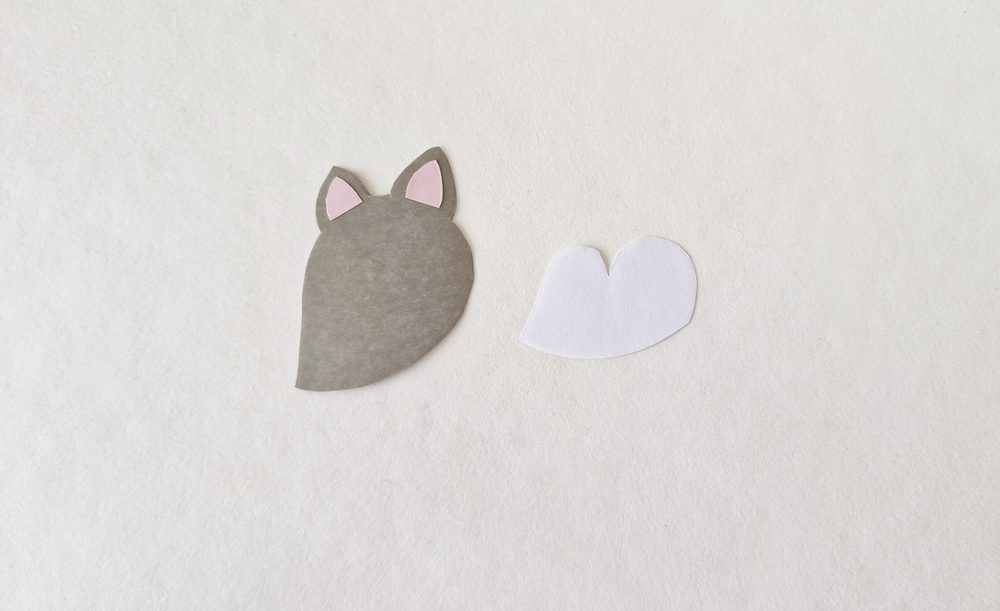
Step 9 – Make the ears
Glue the inner ear cutouts onto the ear parts of the head cutout.
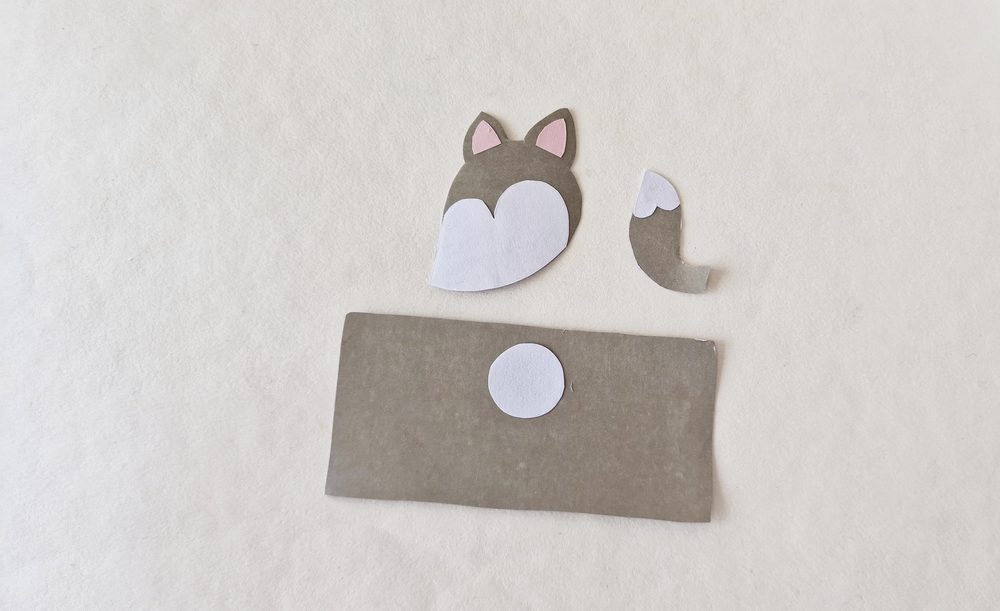
Step 10 – Assemble the wolf’s details
Glue the lower face cutout to the bottom part of the head. Glue the tail tip cutout to the tail, and attach the chest (round cutout) to the base, placing it in the middle.
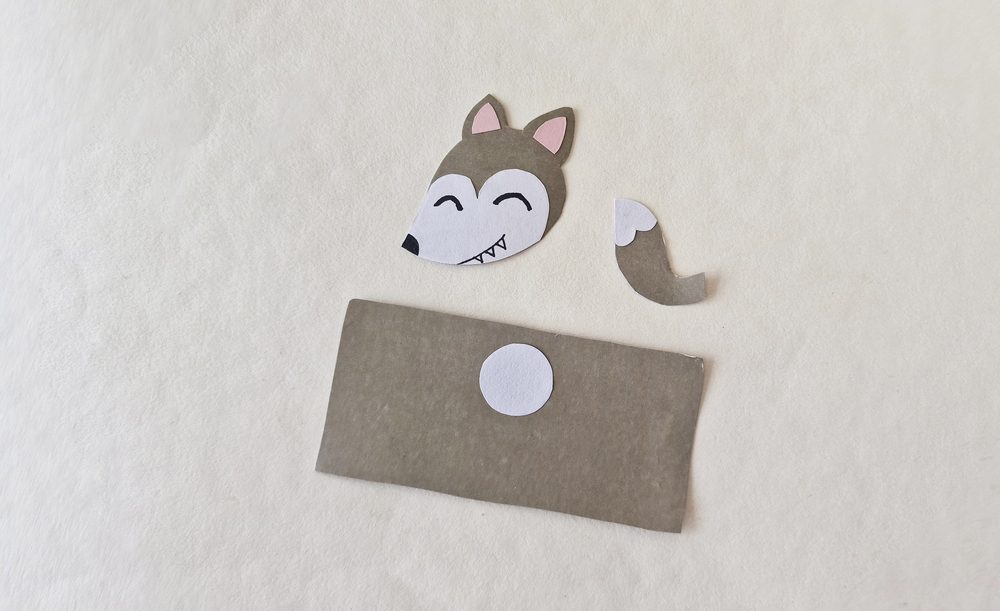
Step 11 – Draw the wolf’s face
Use a black Sharpie to draw the wolf’s facial features.
What kind of wolf will yours be? Fierce? Sneaky? Friendly? You get to decide!
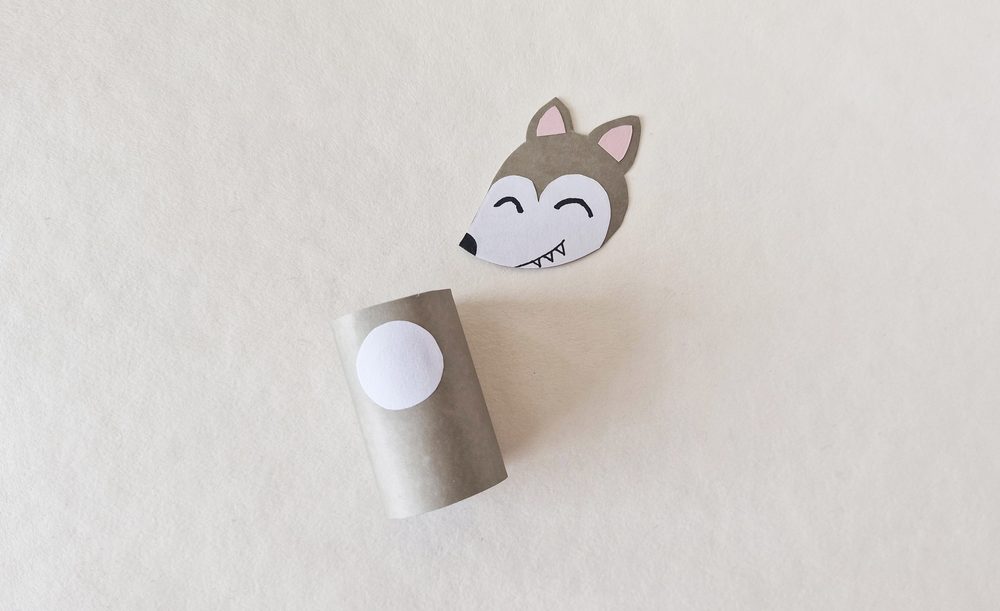
Step 12 – Make the puppet body
Roll the paper pattern and glue the two open sides together to secure its tube shape.
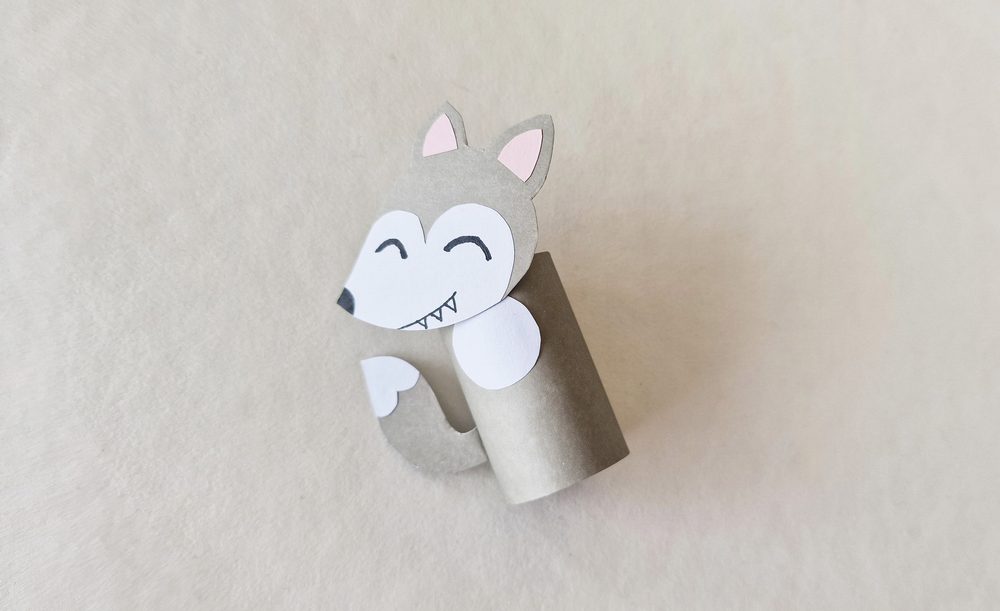
Step 13 – Attach the head and tail
Glue the head pattern onto one open side of the tube. Attach the tail pattern to either side of the tube.
Your wolf puppet is ready to join the story!
Make the Forest
Step 14 – Create the trees
Trace the tree patterns onto colored cardstock, cut them out, and assemble the trees.
Arrange the trees around your puppets. Look at that! You have a little forest where the story can unfold.
The setting is ready. Let the storytelling begin!
And what else might live in this forest? A deer, perhaps? After making your trees, you could add another forest character with this paper deer puppet.
Where is the path to Grandma’s house? Where might the wolf be hiding? What could Little Red Riding Hood see as she walks through the forest?
If your child enjoys making characters they can actually play with, try another papercraft puppet, such as this owl papercraft puppet. Then use the finished puppet to create an entirely new story.
What Can We Learn from Little Red Riding Hood?
A fairy tale can be more than an entertaining story. It can open the door to thoughtful conversations about choices, safety, wisdom, and consequences.
Fairy tales and folktales can become wonderful starting points for conversations, crafts, games, and other hands-on activities. You can find more ideas in this fables and folktales resource.
As you read or act out Little Red Riding Hood, don’t rush to explain everything. Let children wonder first.
Ask questions. Listen to their ideas. Sometimes the most interesting discoveries begin with a question that has more than one possible answer.
1. Think Before You Act
Little Red Riding Hood meets the wolf along the way to Grandma’s house. The wolf asks questions, and she shares information about where she is going.
Let’s wonder: Was that a wise choice?
What might she have done differently? What could happen when we make decisions without thinking about the possible consequences?
Children can explore the difference between acting quickly and taking a moment to consider what might happen next.
Talk about it:
- Why do you think Little Red Riding Hood talked to the wolf?
- What information did she share?
- What could she have done differently?
- Can you think of a time when stopping to think helped you make a better decision?
2. Listen to Wise Advice
In many versions of the fairy tale, Little Red Riding Hood receives instructions before leaving home.
But what happens when someone forgets or chooses not to follow good advice?
This is a chance to talk about the people who help keep us safe and why their guidance matters.
Talk about it:
- What instructions did Little Red Riding Hood receive?
- Why might those instructions have been important?
- Is every piece of advice helpful? How can we tell?
- Who are the trusted people we can ask for help when we are unsure?
3. Pay Attention to Your Surroundings
The forest is an important part of this story. It is where Little Red Riding Hood meets the wolf and where unexpected things happen.
Imagine walking through a forest. What would you notice? Would you hear birds? See footprints? Notice something moving behind a tree?
Paying attention to our surroundings helps us notice what is happening around us. It also gives us clues that can help us make thoughtful decisions.
Talk about it:
- What might Little Red Riding Hood have noticed in the forest?
- Were there clues that something was not quite right?
- Why is it important to pay attention when we are in unfamiliar places?
4. Explore Choices and Consequences
Every character in a story makes choices. Those choices help shape what happens next.
What if Little Red Riding Hood had stayed on the path? What if she had not spoken to the wolf? What if the wolf had made a different choice?
Try changing just one decision and see how the story changes.
Talk about it:
- Which character’s choice changed the story the most?
- Could the story have ended differently?
- What can we learn from the characters’ decisions?
- How do our choices affect other people?
Remember, the goal isn’t simply to find the “right” answer. It’s to help children think carefully, explain their ideas, and consider different possibilities.
Stories can also become jumping-off points for exploring other subjects. If you enjoy connecting literature with hands-on learning and other areas of study, Weird, Unsocialized Homeschoolers has ideas for combining literature with history and geography.
More Ways to Explore the Story
Finished making the puppets? Wonderful! But why should the adventure end there?
Use the puppets to explore the story in new ways.
Want more ways to turn reading into an active experience? Try these fun ways to get young learners thinking about literature, including building scenes, looking for literary elements, and putting on a puppet show.
Want to keep the fairy-tale fun going? Hip Homeschool Moms has even more fairy-tale activities and ideas for kids, including crafts, storytelling activities, and creative ways to retell familiar stories.
1. Retell the Fairy Tale
Place Little Red Riding Hood, the wolf, and the trees in front of your child.
Can they retell the story using their puppets?
Encourage them to remember the beginning, middle, and end. They can use their own words rather than trying to repeat the story exactly.
2. Change the Ending
What if the wolf never reached Grandma’s house?
What if Little Red Riding Hood noticed something suspicious and made a different decision?
Invite children to create a new ending. Let them move the puppets around and act out what happens.
There is no need to follow the original story. This is their chance to become the storyteller!
3. Create a New Character
The forest is a big place. Surely there could be other characters living there!
What if a rabbit saw the wolf? What if a friendly bird tried to warn Little Red Riding Hood?
Children can create a new character and decide how that character might change the story.
4. Build a Forest Setting
Use the paper trees to arrange a forest scene.
Where should the trees go? Where is the path? Where might Grandma’s house be?
Children can experiment with different arrangements and create a setting for their puppet show.
5. Become a Story Detective
Read the fairy tale again, but this time look for clues.
What did the wolf say? What did Little Red Riding Hood notice? Were there details that hinted at what might happen?
Ask children to find evidence in the story to support their ideas.
For example, instead of simply saying, “The wolf was suspicious,” ask:
“What happened in the story that makes you think so?”
This little activity encourages children to look closely, remember details, and explain their thinking.
Frequently Asked Questions
What can children learn from Little Red Riding Hood?
The story can open conversations about making thoughtful choices, listening to wise advice, paying attention to our surroundings, and understanding consequences. It also encourages children to consider how different decisions can change a story.
How can you use Little Red Riding Hood paper puppets?
Children can use the puppets to retell the fairy tale, create a puppet show, invent a new ending, or make up an entirely different adventure.
What other activities can you do after reading Little Red Riding Hood?
Try changing the ending, creating a new forest character, building a forest setting, or becoming a story detective by looking for clues in the text.
A Little Paper, A Big Adventure
Who would have thought that a few pieces of colored cardstock could lead to so many questions and stories?
With this Little Red Riding Hood craft, children can do more than make paper puppets. They can bring a familiar fairy tale to life, explore the characters’ choices, and discover how one small change can send a story in a completely different direction.
So, what will happen in your forest?
Will Little Red Riding Hood follow the path? Will the wolf surprise everyone? Will a new character appear?
The puppets are ready. The forest is waiting.
Now it’s time to see what your young storytellers imagine!
Looking for more hands-on projects? Explore more kids’ crafts and hands-on activities.
And why stop the fun when the puppets are finished? Turn your fairy-tale afternoon into a whole family experience by making a simple snack together. Love These Recipes has a collection of kid-friendly recipes that children can help prepare in the kitchen.